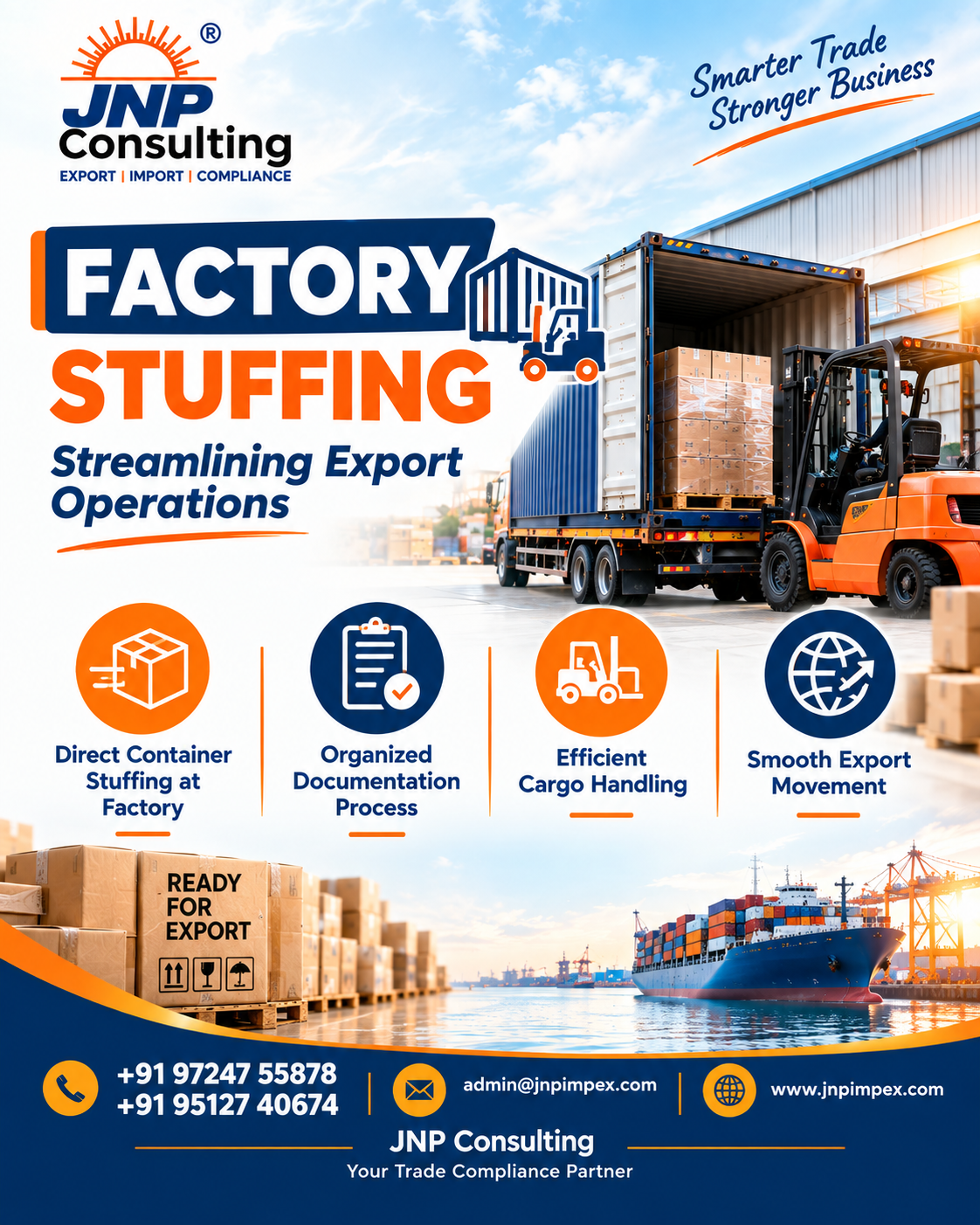
Factory Stuffing: Procedure and Benefits for Exporters
Factory Stuffing is an important process in export logistics that allows eligible exporters to load export goods directly into containers at their factory or approved premises. This can help reduce unnecessary cargo movement and make export operations more organised. Understanding the Factory Stuffing Procedure is essential for exporters who regularly handle containerised shipments.
What Is Factory Stuffing?
Factory stuffing refers to loading export goods directly into a container at the exporter’s factory or designated premises. After the goods are properly packed and loaded, the container is sealed according to the applicable customs procedure and transported for further export processing.
This process can give exporters better control over packing, cargo handling, and shipment preparation.
Factory Stuffing Procedure
The Factory Stuffing Procedure generally involves multiple stages. First, the exporter prepares the goods, packing, and required export documentation. A suitable container is arranged at the approved premises, after which the goods are inspected and loaded into the container.
The exporter must follow the applicable customs requirements and coordinate with the concerned authorities or authorised personnel. Once the required verification and procedures are completed, the container is sealed as prescribed. The sealed container is then transported to the designated port or location for further export processing.
Proper coordination between the exporter, customs authorities, transporter, shipping line, and other stakeholders is important for smooth cargo movement.
Benefits of Factory Stuffing
Factory stuffing can offer several operational advantages to exporters:
- Direct container loading at the factory
- Better control over cargo handling
- Reduced unnecessary movement of goods
- Organised export documentation
- Efficient coordination of shipments
- Smoother movement of export cargo
For businesses handling regular containerised exports, an efficient stuffing process can help improve logistics planning and shipment management.
Importance of Documentation
Accurate documentation is an essential part of the Factory Stuffing Procedure. Exporters should maintain correct details related to the goods, quantity, packing, shipping information, and other applicable requirements.
Proper documentation can help minimise discrepancies and support smoother customs processing. Exporters should also ensure that the information provided across relevant documents is consistent.
Who Can Use Factory Stuffing?
Factory stuffing can be useful for manufacturers, merchant exporters, and businesses that regularly export containerised goods. Industries such as engineering, textiles, pharmaceuticals, chemicals, machinery, consumer products, and other manufacturing sectors may benefit from this process, depending on their operational requirements and applicable permissions.
The exact requirements can vary depending on the nature of goods, premises, customs procedures, and other applicable regulations.
Professional Support for Exporters
Managing export procedures requires proper planning, documentation, and coordination. JNP Consulting provides professional support for export-import compliance, customs-related procedures, documentation, and Factory Stuffing requirements.
With appropriate guidance, exporters can better organise their cargo loading, documentation, and shipment coordination. Understanding and correctly following the Factory Stuffing Procedure can help businesses maintain a structured export workflow and manage their containerised shipments more efficiently.