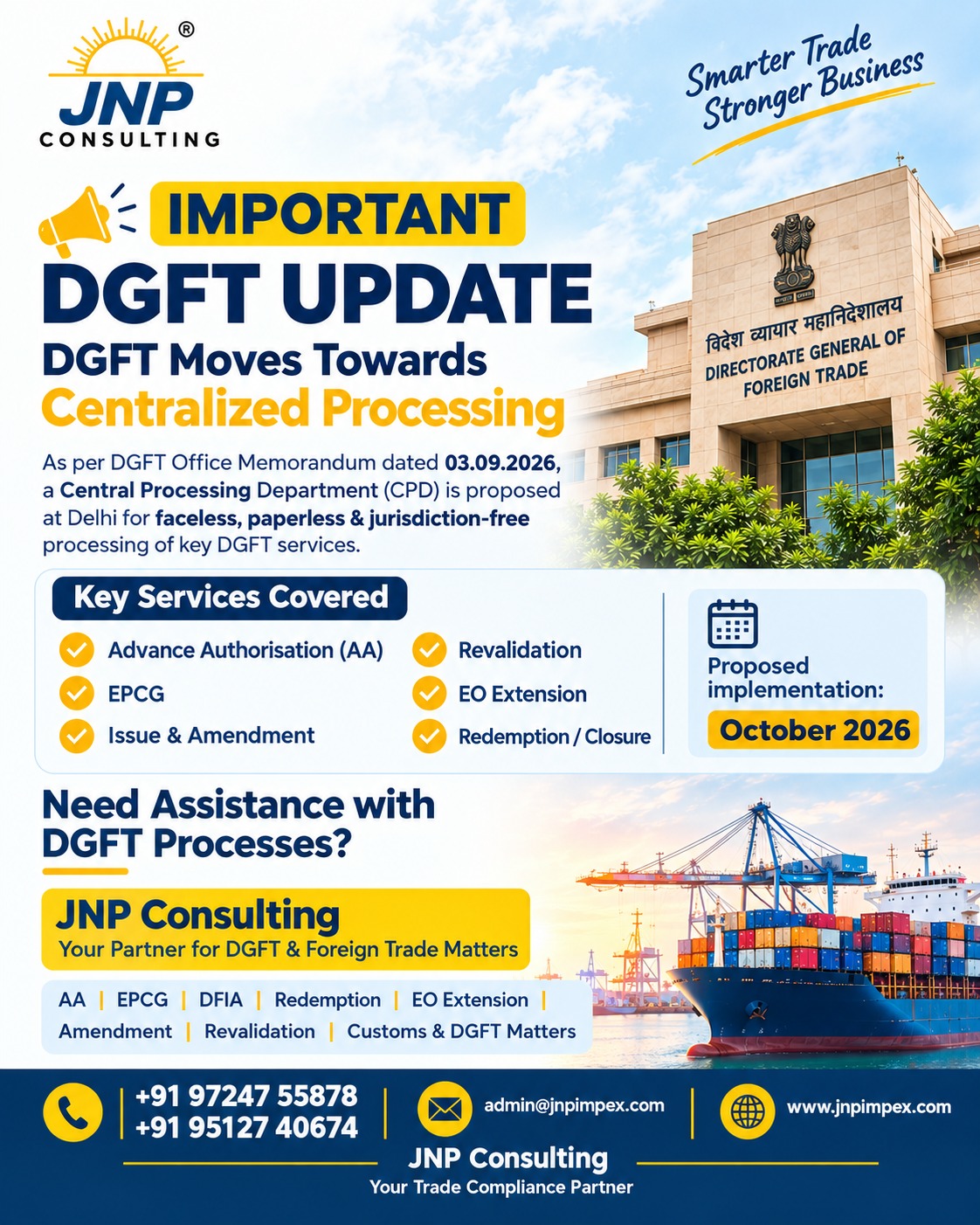
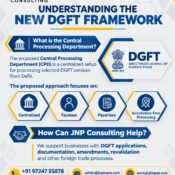
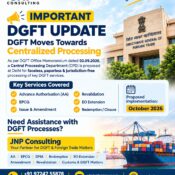
The Directorate General of Foreign Trade (DGFT) is taking an important step towards making India’s foreign trade administration more digital, centralized and transparent. In September 2026, DGFT initiated the process of establishing a Central Processing Department (CPD) at the Central Licensing Area (CLA), Delhi, under the proposed Faceless Trade Facilitation System (FTFS). The objective is to enable faceless, paperless and jurisdiction-free processing of eligible trade-related applications.
What Is the DGFT Central Processing Department?
The Central Processing Department is proposed as a centralized unit for processing specified DGFT applications. Instead of applications being handled only through the applicant’s geographical Regional Authority, eligible applications may be processed through a centralized and digital mechanism.
The initiative is intended to improve transparency, reduce processing time and support ease of doing business for exporters and importers. DGFT has also moved officers from its headquarters and regional offices to support the new department. According to recent reports based on DGFT memoranda, 53 officers have been posted or transferred to the CPD.
Which DGFT Services Are Covered?
The proposed centralized processing framework is particularly relevant for businesses using Advance Authorisation (AA) and EPCG. The identified processes include:
- Advance Authorisation and EPCG issuance
- Amendment of authorisations
- Revalidation
- Export Obligation (EO) extension
- Redemption and closure
The proposal also covers certain certificate-related services and selected IEC key-detail modifications. However, not every DGFT matter will shift to the CPD. Enforcement, adjudication, recovery, fraud-related matters, physical verification, risk-based verification and certain legacy cases are proposed to remain with Regional Authorities.
What Does This Mean for Exporters?
For exporters and importers, the proposed FTFS could bring changes in the way applications and post-authorization requests are processed. Businesses dealing with Advance Authorisation and EPCG should maintain accurate documentation, monitor export obligations and keep track of important activities such as amendments, revalidation, EO extension and redemption.
The proposed system is targeted for implementation in October 2026, with recent DGFT-related reporting indicating the second fortnight of October as the proposed timeline. Businesses should follow the final DGFT notification and portal instructions for the confirmed operational date and scope.
How JNP Consulting Can Help
With continuous changes in DGFT procedures, professional guidance can help businesses manage documentation and compliance more efficiently. JNP Consulting provides support for DGFT and foreign trade-related requirements, including Advance Authorisation, EPCG, DFIA, RCMC, redemption, EO extension, revalidation and other DGFT matters.
Businesses looking for a Best DGFT Consultant in India can work with JNP Consulting for structured assistance with applications, documentation and compliance requirements.
The introduction of centralized processing marks another step towards digital trade facilitation. Exporters should stay updated with official DGFT notifications and prepare their documentation and compliance records accordingly.