Why Smart Exporters Choose Factory Stuffing
In today’s competitive global trade environment, exporters are constantly looking for ways to improve efficiency, reduce logistics costs, and ensure timely shipments. One such facility that has gained significant importance among exporters is Factory Stuffing. It enables exporters to stuff and seal export containers at their own manufacturing premises under customs supervision, thereby simplifying the export process and minimizing operational challenges.
What is Factory Stuffing?
Factory Stuffing is a customs-approved process under which export goods are loaded, stuffed, and sealed into containers directly at the exporter’s factory or warehouse instead of transporting them to a Container Freight Station (CFS) or Inland Container Depot (ICD) for stuffing.
The customs authorities supervise or authorize the sealing process, allowing exporters to dispatch sealed containers directly to the port for export. This process is especially beneficial for manufacturers handling bulk consignments, fragile cargo, or time-sensitive shipments.
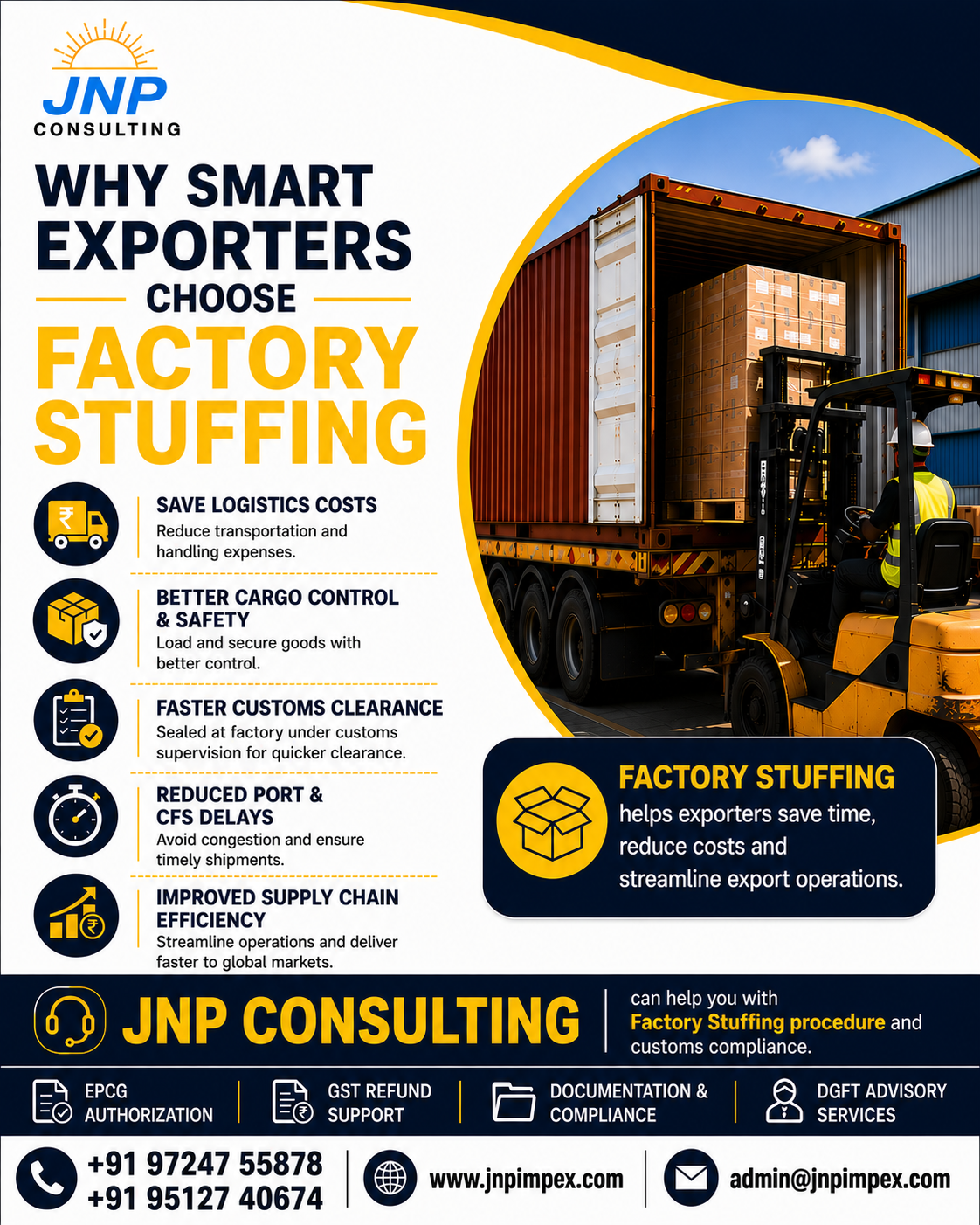
Why Smart Exporters Prefer Factory Stuffing
1. Significant Cost Savings
One of the primary reasons exporters opt for factory stuffing is the reduction in logistics costs. Exporters can save on:
- Transportation charges to CFS/ICD
- Multiple handling expenses
- Container detention charges
- Additional labor costs
By stuffing containers at their own premises, businesses can effectively manage expenses and improve profitability.
2. Better Control Over Cargo Handling
Factory stuffing gives exporters complete control over the loading and handling process. Their own trained staff can supervise cargo movement, ensuring proper packing, loading, and securing of goods inside the container.
This minimizes the chances of:
- Cargo damage
- Pilferage
- Misplacement of goods
- Packaging issues
Such control is particularly important for exporters dealing with high-value or delicate products.
3. Faster Export Operations
TheFactory stuffing procedure helps exporters streamline export activities and reduce delays. Since containers are sealed at the factory premises itself, businesses can avoid long waiting periods at CFS facilities.
As a result, exporters benefit from:
- Quicker dispatch of shipments
- Improved delivery timelines
- Enhanced customer satisfaction
- Better supply chain efficiency
4. Reduced Port Congestion Issues
Container Freight Stations often experience congestion, especially during peak export seasons. Factory stuffing allows exporters to bypass these bottlenecks and send sealed containers directly to the port, reducing dependency on third-party facilities.
This enables businesses to maintain consistency in shipment schedules and avoid unnecessary delays.
5. Improved Compliance and Documentation
The Factory stuffing procedure requires exporters to maintain proper records and comply with customs regulations. While compliance is essential, it also encourages businesses to establish systematic documentation practices.
Exporters are required to manage:
- Shipping documents
- Packing lists
- Commercial invoices
- Container sealing records
- Customs permissions
Proper compliance reduces the risk of disputes and ensures smooth customs clearance.
Who Can Benefit from Factory Stuffing?
Factory stuffing is particularly beneficial for:
- Manufacturers exporting goods regularly
- Businesses shipping bulky cargo
- Exporters handling fragile products
- Companies dealing with urgent international orders
- Businesses aiming to optimize logistics costs
Companies with high export volumes can achieve substantial operational efficiencies by adopting this process.
How JNP Consulting Can Help
Understanding customs requirements and implementing the Factory stuffing procedure correctly can sometimes be challenging for exporters. Expert guidance ensures that businesses comply with applicable regulations while maximizing operational benefits.
At JNP Consulting, we assist exporters with customs-related advisory services, documentation support, regulatory compliance, and guidance on obtaining approvals for factory stuffing facilities. Our team works closely with businesses to simplify export procedures and help them achieve seamless international trade operations.
Conclusion
Factory Stuffing has emerged as a smart logistics solution for exporters seeking cost efficiency, operational control, and faster shipment processing. By reducing handling costs, improving cargo security, and minimizing delays, exporters can strengthen their competitiveness in global markets. Businesses looking to enhance their export capabilities should consider factory stuffing as a strategic step toward efficient and compliant international trade operations.